![Audiobooks for Kids: Benefits and Complete Guide for Parents [2026]](/_next/image?url=%2Fimages%2Fblog%2Faudiocuentos-infantiles-guia.webp&w=1920&q=75)
Children's audiobooks have revolutionized the way kids enjoy stories. Whether in the car, before bed, or as a play companion, audiobooks offer an immersive experience that combines imagination, language development, and quality entertainment.
In this complete guide, we explore why audiobooks are so beneficial, how to choose the best ones for each age, and why personalized audiobooks featuring your child's name make a significant difference.
What Are Children's Audiobooks?
An audiobook is a professionally narrated story that children can listen to without needing to read. Unlike traditional audiobooks, children's audiobooks are specially designed to capture young attention with:
- Expressive voices that bring characters to life
- Sound effects that create immersive environments
- Background music that reinforces the story's emotions
- Adapted duration for each age's attention span
Audiobooks don't replace traditional reading—they complement it. Research from the University of Sussex shows that alternating between reading and audio improves reading comprehension by 25%.
Benefits of Audiobooks for Child Development
1. Language and Vocabulary Development
When children listen to audiobooks, they're exposed to:
- Rich and varied vocabulary they might not hear in everyday conversations
- Complex grammatical structures presented naturally
- Correct pronunciation that reinforces speech learning
- Intonation and expressiveness that teach how to communicate emotions
Key finding: Children who regularly listen to audiobooks show 30% broader vocabulary than those who don't, according to child language development studies.
2. Imagination Stimulation
Unlike screens where everything is "given," audiobooks force the brain to:
- Create mental images of characters and settings
- Visualize actions from verbal descriptions
- Exercise creativity without direct visual support
Audiobooks are perfect for balancing screen time. They offer quality entertainment while resting the eyes and activating imagination.
3. Improved Concentration and Active Listening
In a world full of constant visual stimuli, listening to an audiobook trains:
- Sustained attention for increasingly longer periods
- Active listening to not lose the story thread
- Auditory memory to remember characters and events
- Following instructions (useful for school)
4. Emotional Support and Relaxation
Audiobooks are especially valuable for:
- Sleep routines: Listening to a story in the dark induces relaxation
- Anxious moments: A familiar voice narrating distracts and calms
- Difficult transitions: In the car, waiting rooms, long trips
- Processing emotions: Stories addressing fears, changes, or new situations
5. Fostering Love for Stories
Audiobooks are often the gateway to the literary world for:
- Children with reading difficulties who enjoy stories without reading frustration
- Active children who prefer listening while playing
- Busy families who don't always have time to read aloud
Best Moments for Audiobooks
Before Bedtime
The most popular time for audiobooks. Benefits:
- Reduces visual stimulation (no screens)
- Creates a predictable and relaxing routine
- Allows parents to rest while the child listens
- Facilitates the transition from activity to sleep
Important tip: Choose specific bedtime audiobooks with calm endings. Avoid exciting adventure stories that might activate the child.
In the Car or Transport
Long trips transform with audiobooks:
- Prevents motion sickness (unlike reading or watching screens)
- The whole family can listen together
- Makes time fly in traffic
- Reduces sibling fights ("we all listen to the same thing")
During Free Play
Many children enjoy listening to stories while:
- Playing with Lego or building blocks
- Painting or drawing
- Playing with playdough
- Resting in their room
During Waiting Moments
Doctor's offices, restaurants, lines... audiobooks are perfect allies:
- Don't require internet connection (if downloaded)
- Are silent for others (with headphones)
- Keep the child entertained without screens
How to Choose Audiobooks by Age
Babies and Up to 2 Years: Short and Rhythmic Audiobooks
- Duration: 2-5 minutes
- Characteristics: Songs, rhymes, repetitions
- Themes: Animals, colors, everyday objects
- Voice: Soft, melodic, paced
2 to 4 Years: Simple Stories with Friendly Characters
- Duration: 5-10 minutes
- Characteristics: Linear plots, happy endings
- Themes: Friendship, family, small adventures
- Voice: Expressive but not dramatic
4 to 6 Years: Adventures with Morals
- Duration: 10-15 minutes
- Characteristics: Clear problems and solutions
- Themes: Overcoming challenges, bravery, empathy
- Voice: Dynamic with character voices
6 to 8 Years: More Complex Stories
- Duration: 15-25 minutes
- Characteristics: Plots with twists, multiple characters
- Themes: Fantasy, mystery (mild), humor
- Voice: Professional narration with varied rhythm
8 to 12 Years: Chapter Audiobooks and Series
- Duration: 30 minutes or more (by chapters)
- Characteristics: Episodic stories
- Themes: Adventure, science fiction, real stories
- Voice: Mature and immersive narration
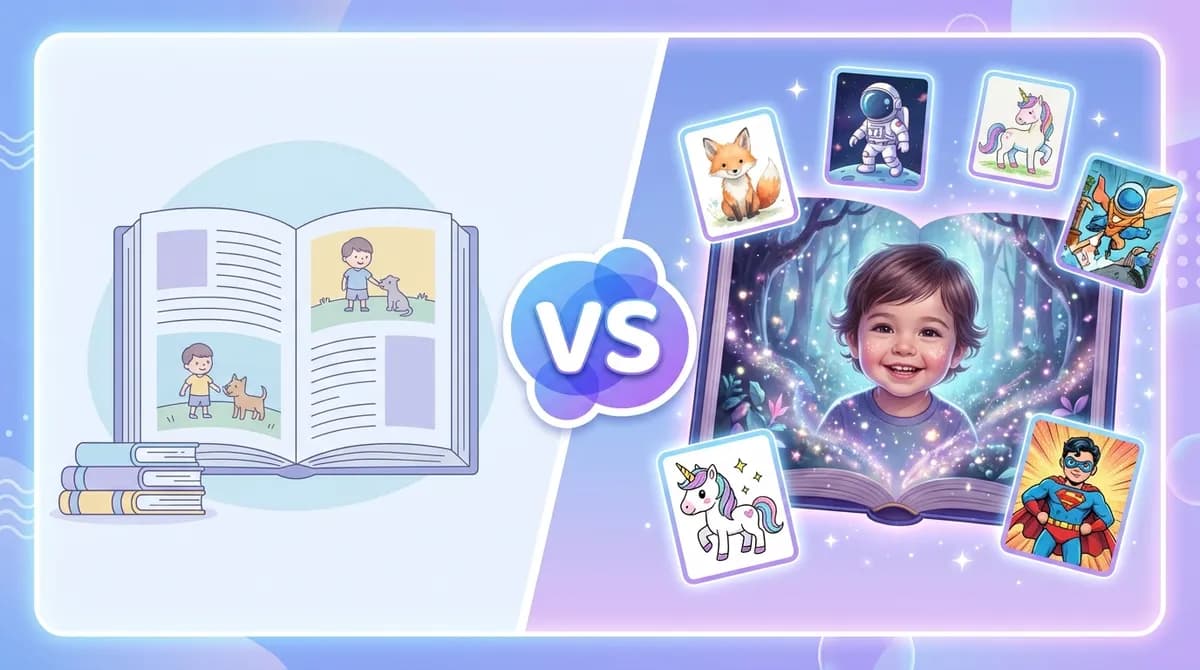
The Power of Personalized Audiobooks
Imagine an audiobook where:
- The protagonist has your child's name
- The narration mentions their name at key moments
- The story is created especially for them
Personalized audiobooks take the experience to another level because:
1. Immediate Emotional Connection
When a child hears their own name in a story, their brain reacts specially. Neuroscience studies show that hearing one's name activates brain areas associated with:
- Personal identity
- Increased attention
- Long-term memory
2. Greater Story Immersion
Children feel inside the story, not as external observers. This improves:
- Plot comprehension
- Story retention
- Desire to listen multiple times
3. Self-Esteem Reinforcement
Hearing stories where they are heroes, solve problems, and live adventures reinforces the positive image they have of themselves.
Audiobooks with Word Highlighting: Learning to Read by Listening
An evolution of traditional audiobooks is the reading karaoke format, where:
- Words are highlighted as they're narrated
- The child can follow the text visually
- The written word connects with its sound
This format is especially useful for:
- Early readers who are learning to decode
- Children with dyslexia who benefit from audio support
- Language learning where listening and reading reinforce acquisition
Audiobooks vs Videos: Why Choose Audio
| Aspect | Audiobooks | Videos |
|---|---|---|
| Imagination | High (child creates images) | Low (everything is given) |
| Visual fatigue | None | High (blue light, flickering) |
| Before bedtime | Ideal (relaxes) | Harmful (stimulates) |
| Multitasking | Yes (while playing) | No (requires visual attention) |
| Language development | High (active listening) | Medium (passive) |
Pediatricians recommend limiting screens to 1-2 hours daily. Audiobooks don't count as screen time, making them a valuable resource for families wanting to reduce device exposure.
Where to Find Quality Audiobooks
Streaming Platforms
- Spotify and Apple Music have children's audiobook sections
- YouTube (with screen off or in background)
- Audible and Storytel for children's audiobooks
Digital Libraries
Many public libraries offer audiobook lending through apps like Libby or OverDrive.
Personalized Audiobooks
Platforms like The Tales Of allow you to create audiobooks where your child is the protagonist:
- Unique story generated with AI
- Professional narration mentioning their name
- Synchronized word highlighting
- Download for offline listening
Tips for Incorporating Audiobooks into Routine
1. Establish Fixed Moments
Children benefit from routine. Choose one or two daily moments for audiobooks:
- Always before bed
- On the way to school
- After snack time
2. Create the Right Environment
For relaxation audiobooks:
- Dim or off lights
- Comfortable position (bed, sofa, rug)
- No interruptions from other devices
3. Listen Together
Especially at first, listening together allows:
- Discussing the story afterward
- Resolving vocabulary questions
- Creating a connection moment
4. Let Them Repeat Favorites
Repetition is normal and beneficial. Children:
- Memorize parts they like
- Discover new details in each listen
- Find security in the familiar
5. Vary Genres and Themes
Alternate between:
- Adventure stories
- Educational stories
- Fables with morals
- Special personalized stories
Frequently Asked Questions About Audiobooks
Do audiobooks replace reading?
No, they complement it. Joint reading has unique benefits (physical contact, interaction, seeing illustrations). Audiobooks are ideal for moments when reading isn't possible.
From what age can they listen to audiobooks?
From babies. Newborns benefit from hearing narrator voices that calm and stimulate auditory development.
How much audiobook time is recommended?
Depends on age:
- Babies: 5-10 minutes
- Preschoolers: 15-20 minutes
- School-age: 30 minutes or more
Is it better with or without headphones?
For children under 2 years, avoid headphones. For older ones, use volume-limited headphones (max 85 dB) and only for short periods.
Do audiobooks help with sleep problems?
Yes, especially when part of a consistent routine. Bedtime audiobooks are designed to induce relaxation.
Conclusion: The Gift of Narrated Stories
Children's audiobooks are much more than entertainment. They are tools for cognitive, emotional, and linguistic development that enrich childhood in deep and lasting ways.
Whether it's a traditional story or a personalized audiobook where your child is the hero, every story listened to is a gift that:
- Feeds their imagination
- Develops their language
- Reinforces love for stories
- Creates memories that will last a lifetime
Related: