![Complete Guide: Bedtime Stories for Children [2026]](/_next/image?url=%2Fimages%2Fblog%2Fguia-cuentos-dormir-2026.webp&w=1920&q=75)
Bedtime can be a magical moment or a battlefield. The difference, in many cases, lies in how we prepare children for sleep. Bedtime stories are not just entertainment: they are a powerful tool for establishing healthy routines, reducing nighttime anxiety, and creating family connection moments that children will remember their entire lives.
Why Stories Help Sleep: The Science Behind the Magic
When we read a story to a child before bed, we activate a series of neurological processes that facilitate the transition to sleep. It's not magic, it's biology.
Studies from Harvard University demonstrate that shared reading before bed reduces cortisol levels (stress hormone) by 30% and increases melatonin production, the sleep hormone.
The scientific mechanisms that make bedtime stories effective:
- Nervous system regulation: A calm parent's voice activates the parasympathetic nervous system, responsible for relaxation
- Comforting predictability: Routines reduce anxiety because the brain knows what comes next
- Stimulus disconnection: The story captures attention and pulls the child away from screens and stimulating games
- Positive association: The brain learns to associate "story" with "bedtime"
The Power of Personalized Bedtime Stories
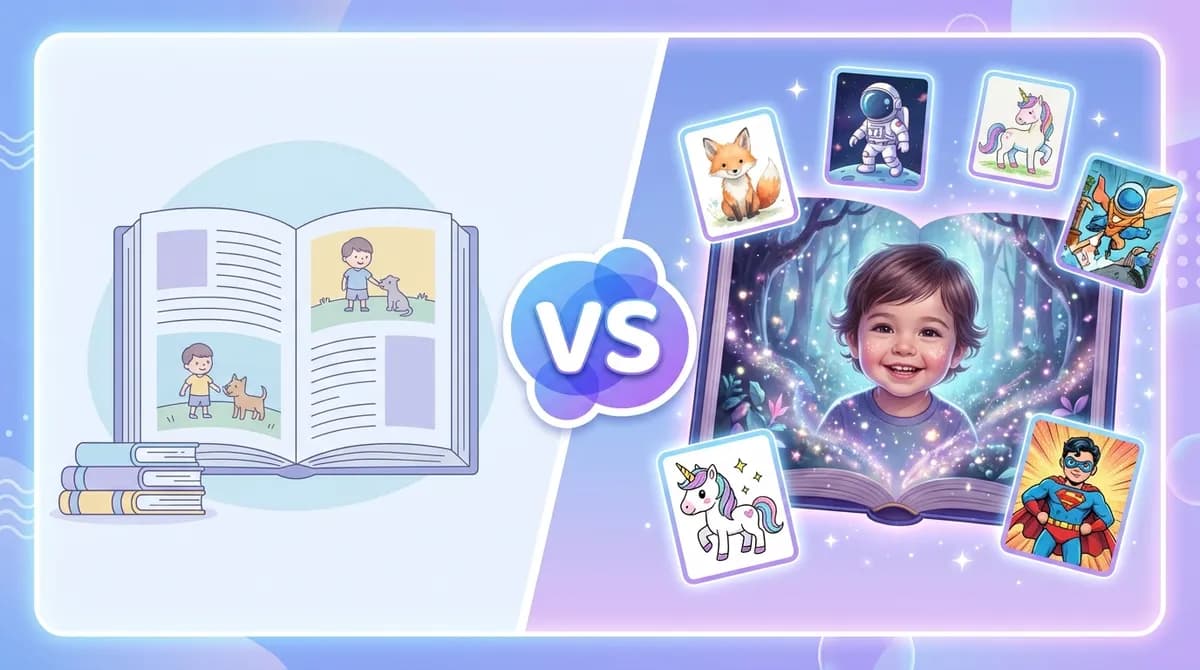
When the child is the protagonist of the story, the effect multiplies. Seeing their name on the pages and recognizing themselves in the illustrations creates an immediate emotional connection that facilitates relaxation.
Personalized bedtime stories are especially effective because the child sees themselves having peaceful and safe endings, which reduces nighttime fears and anxiety.
Ideal Story Duration by Age
Not all children need the same type of story or the same duration. Adapting the story to age is key to maximizing effectiveness.
Babies (1-3 years): 3-5 minutes
At this age, attention is limited but the need for routine is maximum. Stories should be:
- Very short: No more than 5 minutes
- Repetitive: Repetition is comforting
- Simple vocabulary: Everyday words they recognize
- Visual: Large and colorful illustrations
- Rhythmic: Songs and rhymes help relaxation
Example structure for babies:
"This is the story of [name]. [Name] played all day. Now [name] is sleepy. The stars shine. The moon smiles. [Name] closes their eyes. [Name] has sweet dreams."
Preschool (3-5 years): 5-10 minutes
Preschool children can follow simple plots and enjoy characters they identify with.
- Friendly characters: Animals, princesses, accessible heroes
- Simple problems: A lost object, a sad friend
- Positive resolutions: Always happy endings
- Subtle morals: Sharing, being kind, being brave
- Controlled fantasy elements: Magic yes, monsters no
Avoid stories with elements of fear or tension for this age. Even "villains" should be harmless and reform at the end.
Early Readers (5-7 years): 10-15 minutes
At this age, children enjoy more elaborate adventures but still need comforting endings.
- Developed plots: Clear beginning, middle, and end
- Rich descriptions: Help visualization and relaxation
- Explicit values: Friendship, honesty, perseverance
- The protagonist overcomes challenges: But without too much tension
- Smooth transitions: The ending should gradually lead toward calm
Middle Readers (8-12 years): 15-20 minutes (or chapters)
Older children can handle chapter stories, which creates positive anticipation for the next night.
- Serialized stories: One chapter each night
- Complex characters: With motivations and growth
- Moral dilemmas: That invite reflection (not before bed)
- Enriched vocabulary: Learning opportunity
- Calm chapter endings: Avoid cliffhangers that generate anxiety
Types of Stories That Relax (and Which to Avoid)
Not all stories are appropriate for bedtime. Some stimulate when they should calm.
Recommended Themes for Bedtime
Nature and tranquil landscapes:
- Magical forests where animals sleep
- Calm seas with shining fish
- Enchanted gardens with flowers that close at night
- Soft clouds where dreams are born
Completed adventures:
- The hero has already solved the problem and rests
- The treasure was found and everyone celebrates
- The mission ended and it's time to go home
- Friends are reunited and safe
Routines of other characters:
- How forest animals sleep
- Night at the princess's castle
- The astronaut returns from their stellar journey
- The dream guardian makes their rounds
Themes to Avoid Before Bed
- Active monsters or villains: Even if defeated, they activate the alert state
- Chases or dangers: Increase heart rate
- Unresolved mysteries: Generate anxiety and recurring thoughts
- Intense competitions: Activate "fight or flight" mode
- Separations or losses: Can cause nighttime separation anxiety
Our quality control system at The Tales Of automatically analyzes each story to ensure it has a relaxing tone, appropriate content, and positive endings perfect for bedtime.
How to Establish the Perfect Bedtime Story Routine
Consistency is more important than perfection. A simple routine repeated every night is more effective than an elaborate one done occasionally.
Step 1: Define the Schedule (and Stick to It)
Choose a fixed time for the story and maintain it even on weekends. The child's brain learns to prepare for sleep when it recognizes the signals.
Recommended time by age:
- 1-3 years: 6:30-7:30 PM
- 3-6 years: 7:00-8:00 PM
- 6-9 years: 7:30-8:30 PM
- 9-12 years: 8:00-9:00 PM
Step 2: Create the Environment
Before starting the story, prepare the environment for sleep:
- Dim lights: A soft reading lamp is ideal
- Cool temperature: The body needs to cool down to sleep (64-68°F)
- No screens: At least 30 minutes before the story
- Comfortable clothes: Pajamas already on
- Optional white noise: Some families use soft background music
Step 3: The Pre-Story Ritual
Establish actions that always occur before the story:
- Go to the bathroom
- Brush teeth
- Drink a little water
- Choose a stuffed animal or blanket
- Get into bed
- "Now comes the story"
Step 4: The Reading
- Calm and slower voice: Gradually more paused toward the end
- Physical contact: Sit close, stroke their hair
- No interruptions: Silence your phone
- Participation if they ask: But without stimulating too much
- Predictable ending: "The end" or your special phrase
Step 5: The Transition to Sleep
After the story, avoid restarting activity:
- A kiss and a "good night"
- Turn off the light (or leave a dim one)
- Leave without prolonging the goodbye
- If they cry, return briefly but without restarting the story
If your child asks for "another story," offer the alternative of "tomorrow we'll have another one." Maintaining consistent limits is part of a healthy routine.
Common Mistakes That Ruin Story Time
Even with the best intentions, there are habits that sabotage the effectiveness of the bedtime story.
Mistake 1: Stories That Are Too Stimulating
The most common mistake is choosing exciting stories thinking they will "tire" the child. In reality, action stories activate cortisol and make sleep difficult.
Solution: Save exciting adventures for the afternoon and use calm stories for night.
Mistake 2: Schedule Inconsistency
Reading stories "when there's time" doesn't create the necessary neurological association. The brain needs repetition to learn.
Solution: Even if it's 5 minutes, do it EVERY day at the same time.
Mistake 3: Screens Before the Story
Blue light from screens suppresses melatonin for up to 90 minutes after exposure. A story after watching the tablet loses much of its effectiveness.
Solution: Establish a screen "shutdown time" at least 30 minutes before the story.
Mistake 4: The Story as Reward or Punishment
"If you misbehave, no story" turns the connection moment into a control tool. The child associates the story with anxiety and behavior.
Solution: The story is a routine right, not a privilege to be earned.
Mistake 5: Abrupt Endings
Finishing the story and running out doesn't give the brain time to transition. The child is left in an alert state.
Solution: After the story, mentally count to 60 while saying goodnight. That minute makes the difference.
The Science of Child Sleep: Why Routine Matters
Understanding how child sleep works helps value why stories are so effective.
The Sleep Cycle in Children
Children have sleep cycles of 50-60 minutes (adults, 90). This means:
- They wake up partially more frequently
- They need to know how to "fall back asleep" alone
- Sleep associations are crucial
Why the story matters: If the child always falls asleep with a story, they learn that "story = safety = sleep." When they wake up in the middle of the night, that positive association helps them fall back asleep.
Melatonin and Circadian Rhythm
Melatonin (sleep hormone) is released in response to darkness and environmental signals. A consistent story routine "trains" the body to release melatonin at the same time each night.
Studies show that children with consistent sleep routines fall asleep 15 minutes faster and have 25% fewer nighttime awakenings.
Personalized Bedtime Stories: The Modern Solution
Modern parents face a challenge: they want to give the best to their children but have less time than ever. AI-generated personalized stories solve this problem.
Advantages of Personalized Bedtime Stories
- Always appropriate: Automatic quality control ensures relaxing content
- Never repeat: A new story every night, same routine
- Adapted by age: Perfect vocabulary and duration
- The child is the hero: Immediate emotional connection
- Guaranteed peaceful endings: Designed to facilitate sleep
- Ready when you need them: No searching in bookstores or online
How Scheduled Stories Work
With The Tales Of, you can schedule automatic stories for each night:
- Set up your child's profile (name, age, preferences)
- Choose the delivery time (for example, 7:30 PM)
- Every day, a new and unique story is ready to read
- The system ensures the content is appropriate for bedtime
Frequently Asked Questions About Bedtime Stories
What do I do if my child doesn't want to listen to stories?
Some children prefer other formats. Try:
- Audio stories (narrated)
- Stories that the child helps create
- Shorter stories
- Letting the child "read" by looking at illustrations
Until what age should stories be read?
There's no limit. Many 10-12 year old children enjoy being read to, especially chapter stories. When they prefer to read alone, you can read in parallel and discuss afterward.
Can I use audiobooks instead of reading myself?
Audiobooks are a valid alternative, but you lose the benefit of physical contact and emotional connection of shared reading. A middle option: listen together to the audiobook while the child looks at illustrations.
What if I don't have time to read every night?
Even 3-5 minutes count. A short story read consistently is better than a long one occasionally. Baby stories of 2-3 minutes are perfect for tight nights.
Should I read the same story every night or vary?
Both strategies are valid:
- Repeat: Creates security, the child anticipates what's coming
- Vary: Maintains interest, stimulates curiosity
A combination works well: a favorite "anchor" story and new variations.
Conclusion: The Best Gift for Your Child's Sleep
Establishing a bedtime story routine is one of the most valuable gifts you can give your child. It doesn't require money, it doesn't require much time, but the benefits last a lifetime:
- Better sleep: Children who sleep better develop better
- Less stress: Predictable routines reduce anxiety
- Family connection: Intimacy moments they'll always remember
- Love of reading: Readers for life
- Emotional tools: They learn to process the day through stories
Personalized stories take these benefits to the next level: your child as the hero, stories that never repeat, always appropriate content, and ready at the time you choose.
Additional Resources
- Personalized Bedtime Stories - Create unique stories where your child is the protagonist
- Sleep Time Calculator - Calculate the ideal sleep time by age
- Scheduled Stories - Set up automatic stories for each night